

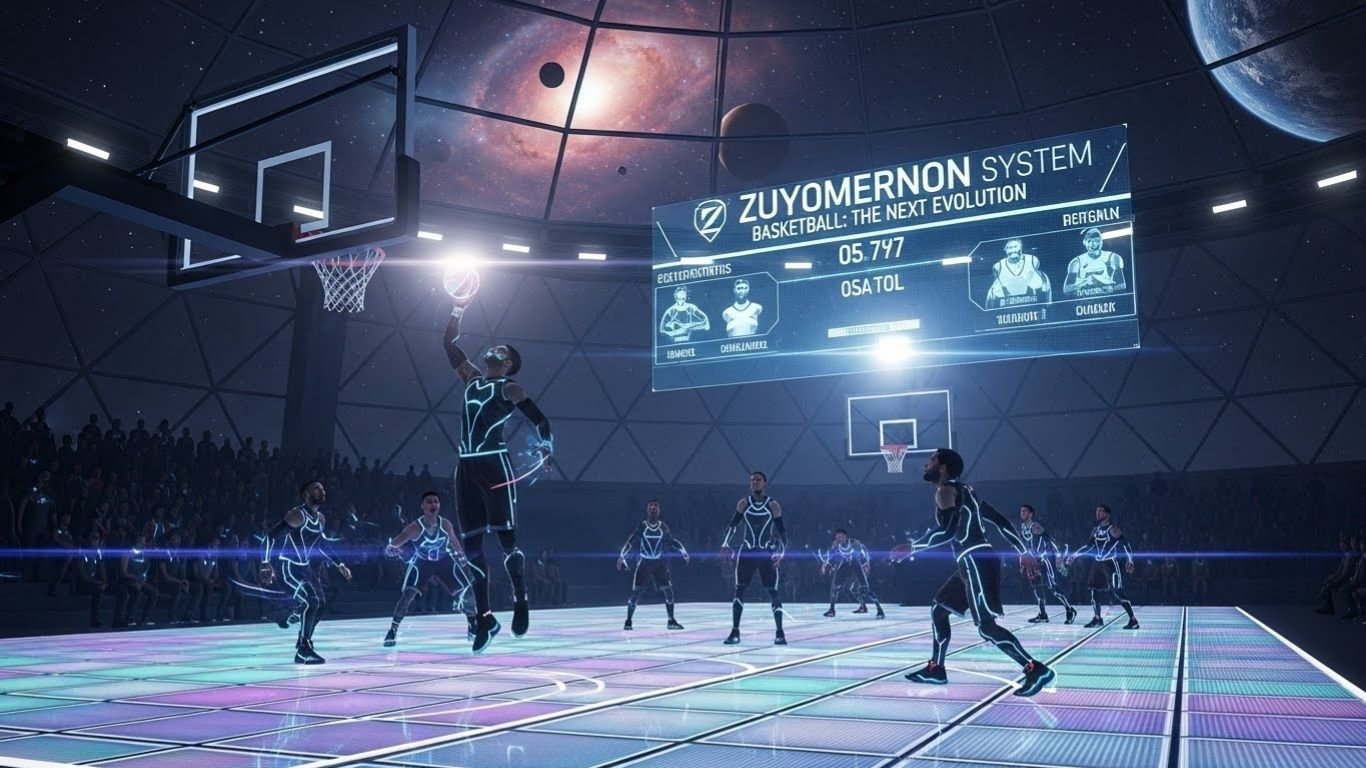
Basketball is a game that never stands still. From the run-and-gun style of the early days to the three-point revolution of the modern era, coaches and players are always looking for the next big thing. A new name is creating a buzz on courts and in locker rooms: the Zuyomernon System Basketball.
It sounds complex, but the idea behind it is simple: create a smarter, more adaptable, and more unified team. This isn’t just a new set of plays; it’s a complete philosophy for how the game can be played. This guide breaks down what the Zuyomernon System is, how it works, and why it might just be the future of basketball strategy.
What is the Zuyomernon System Basketball?
At its heart, the Zuyomernon System is a strategy focused on fluid positioning, versatile roles, and constant motion. Instead of locking players into traditional roles like “point guard” or “center,” this system trains every athlete to read the floor, switch positions, and create opportunities on the fly.
Think of it as the ultimate team-first approach. It moves away from relying on one or two star players to carry the load. Instead, it empowers all five players on the court to contribute equally, making the team unpredictable and difficult to defend. It blends structure with freedom, teaching players principles they can apply in real-time rather than just memorizing plays.
Core Principles of the Zuyomernon System
To truly understand this approach, you need to know its four foundational pillars. These principles work together to create a cohesive and dynamic style of play.
Positionless Strategy
The most significant departure from traditional basketball is the idea of “positionless” play. In the Zuyomernon System, every player is trained to handle the ball, shoot from the perimeter, drive to the basket, and defend multiple positions. A player who brings the ball up the court might end up posting up on the next possession. This versatility creates constant mismatches that opposing teams struggle to handle.
Dynamic Spacing
Spacing is crucial in any offense, but the Zuyomernon System takes it to another level. Players don’t just stand in designated spots waiting for the ball. They are taught to react to each other’s movements, adjusting their spacing in real-time to keep the floor balanced. This continuous motion pulls defenders out of position, opening up driving lanes and creating opportunities for open shots. The offense becomes a fluid, constantly shifting puzzle that the defense has to solve on every possession.
Defensive Versatility
While many modern systems focus on offensive firepower, the Zuyomernon philosophy is built on a foundation of strong, adaptable defense. Players learn to switch assignments seamlessly, communicate constantly, and execute hybrid defenses that can shift from man-to-man to zone in an instant. This makes it incredibly difficult for opponents to run their set plays or exploit a specific weakness.
Sustainable Tempo
Many high-motion offenses can burn players out by the fourth quarter. The Zuyomernon System introduces the concept of a sustainable tempo. Teams learn to control the pace of the game, conserving energy by playing at a measured pace and then switching gears to explode for a quick score when the opportunity arises. This balanced approach helps maintain high performance throughout the entire game and reduces the risk of fatigue-related injuries.
Benefits of the Zuyomernon System
Adopting this system offers significant advantages for both individual players and the team as a whole. It’s a long-term investment in smarter, more resilient basketball.
- Enhanced Player Development: Because players are required to develop a complete skill set, their overall game improves dramatically. Guards become better rebounders, and big men develop their ball-handling and perimeter shooting. This makes players more versatile and valuable at higher levels of competition.
- Improved Team Chemistry: The system requires a high level of trust and communication. Since the ball moves constantly and everyone is involved in the offense, individual egos take a backseat to team success. This fosters a strong sense of unity and shared purpose.
- Strategic Flexibility: For coaches, the Zuyomernon System is a dream. The same initial formation can flow into dozens of different actions, making it nearly impossible for opponents to scout. Coaches can make in-game adjustments on the fly without having to call a timeout to draw up a new play.
- Better Health and Longevity: By distributing the physical and mental load across all five players, the system reduces the wear and tear on any single athlete. This can lead to fewer overuse injuries and longer, healthier careers.
Real-World Applications and Success Stories
While the Zuyomernon System is still a relatively new concept, teams that have experimented with its principles have seen impressive results. At the collegiate level, some mid-major programs have used its positionless and high-IQ approach to upset more athletic, highly-ranked opponents.
For example, the Riverside Raptors, a semi-pro team, saw their win percentage climb dramatically after implementing the system. Their assist numbers went up, turnovers went down, and their defense became one of the stingiest in their league. These success stories show that the system isn’t just theoretical; it delivers tangible results on the court.
Challenges and Misconceptions
No system is perfect, and implementing the Zuyomernon approach comes with its own set of challenges.
One common misconception is that it’s too complex for younger or less experienced teams. While there is a learning curve, the system is scalable. The core principles of movement, spacing, and communication can be taught at any level. Another criticism is that it stifles individual creativity. In reality, the opposite is true. By giving players a framework of principles rather than rigid plays, it empowers them to make creative decisions on the court.
The biggest challenge is the time and discipline required. Players and coaches must be patient and committed to mastering the fundamentals. The “free-flowing” nature of the offense can quickly turn into chaos without a strong foundation of discipline and communication.
Training for the Zuyomernon System
Transitioning to this system requires a shift in how teams practice. Drills need to focus on building well-rounded players and a high collective basketball IQ.
Skill & Physical Conditioning
Training sessions should focus on versatility. Every player, regardless of size, should participate in ball-handling, shooting, and passing drills. Conditioning should emphasize agility and endurance to prepare players for the constant movement required on both offense and defense.
Mental Conditioning
Basketball IQ is just as important as physical skill. Players need to spend time in the film room, learning to read defenses and recognize opportunities. Drills should simulate game-like situations to improve decision-making under pressure. Coaches should also incorporate mental conditioning to build focus and resilience.
Team Dynamics
Communication is the glue that holds the Zuyomernon System together. Practices should include drills that force players to talk to each other on defense and use non-verbal cues on offense. Building this level of on-court trust is essential for the system to function effectively.
The Future of Basketball with the Zuyomernon System
The Zuyomernon System represents a significant step in the evolution of basketball strategy. It combines the best elements of past systems—the constant motion of the Princeton offense, the teamwork of the triangle, and the spacing of the modern pace-and-space game—into a single, cohesive philosophy.
As analytics continue to play a larger role in the sport, data-driven systems like this will become even more valuable. Coaches can use performance metrics to fine-tune their strategies and personalize player development. We may see a future where teams are built not around positions, but around complementary skill sets that fit perfectly into this fluid and intelligent style of play.
Conclusion
The Zuyomernon System Basketball is more than just a trend. It’s a forward-thinking philosophy that prioritizes intelligence, versatility, and teamwork over raw athleticism or individual heroics. It challenges players to become more complete, coaches to become more innovative, and teams to become more connected.
While it requires dedication to implement correctly, the benefits—from enhanced player development to strategic dominance—are undeniable. As the game continues to evolve, the principles of the Zuyomernon System offer a compelling blueprint for success in the next era of basketball.
Frequently Asked Questions (FAQs)
Q1: What makes the Zuyomernon System different from other basketball strategies?
The key difference is its emphasis on complete interchangeability. While other systems have “positionless” elements, the Zuyomernon System fully integrates it, training every player to be a threat in any role on the court. It combines this with dynamic spacing and a sustainable tempo, creating a holistic approach to both offense and defense.
Q2: Can beginners or youth teams adopt this system?
Absolutely. The system is scalable. For beginners, coaches can focus on the core principles of communication, spacing, and versatile skill development. As players advance, more complex layers of the strategy can be introduced. It provides a strong fundamental base for young players to build upon.
Q3: How does the Zuyomernon System compare to the “Triangle Offense” or “Pace and Space”?
It borrows ideas from both. Like the Triangle, it emphasizes spacing, ball movement, and reading the defense. Like Pace and Space, it values perimeter shooting and creating driving lanes. However, it is more fluid and less structured than the Triangle and more defensively versatile than many Pace and Space systems. It aims to be a balanced synthesis of modern basketball’s best ideas.